Case study · Product & engineering
NextDo
The control center for turning software ideas into planned, executed, reviewable, and remembered work.
- Role
- Founder, product & engineering
- Product
- AI project execution platform
- Year
- 2026
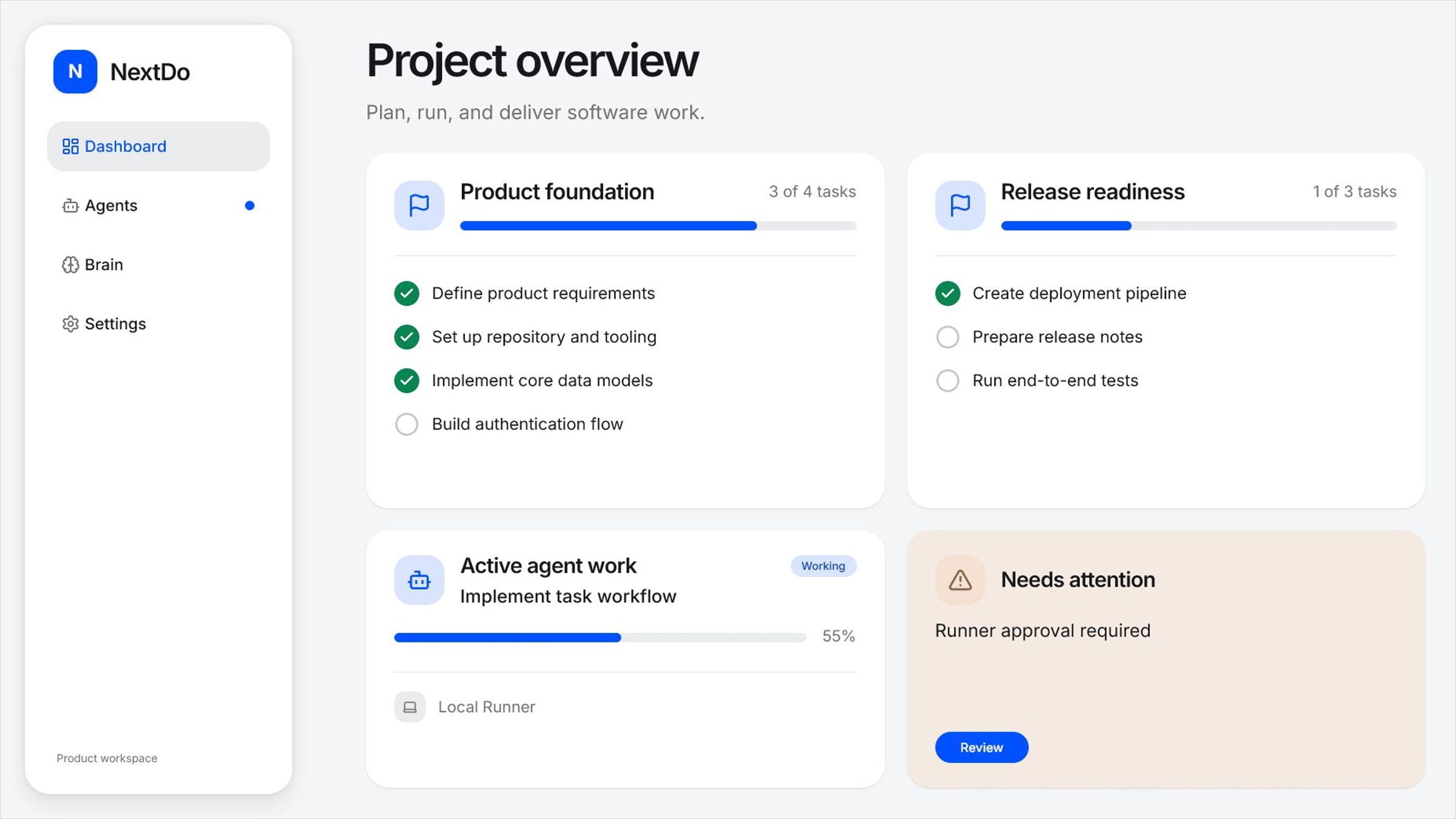
The idea
AI can write code. Shipping a product takes a system.
Prompts alone do not preserve decisions, sequence a roadmap, isolate repository work, recover from failure, or prove that a change is ready to merge.
NextDo brings that missing structure into one self-hostable product. People state the outcome and review the evidence; the platform coordinates the complexity behind it.
How it works
Plan. Execute. Remember.
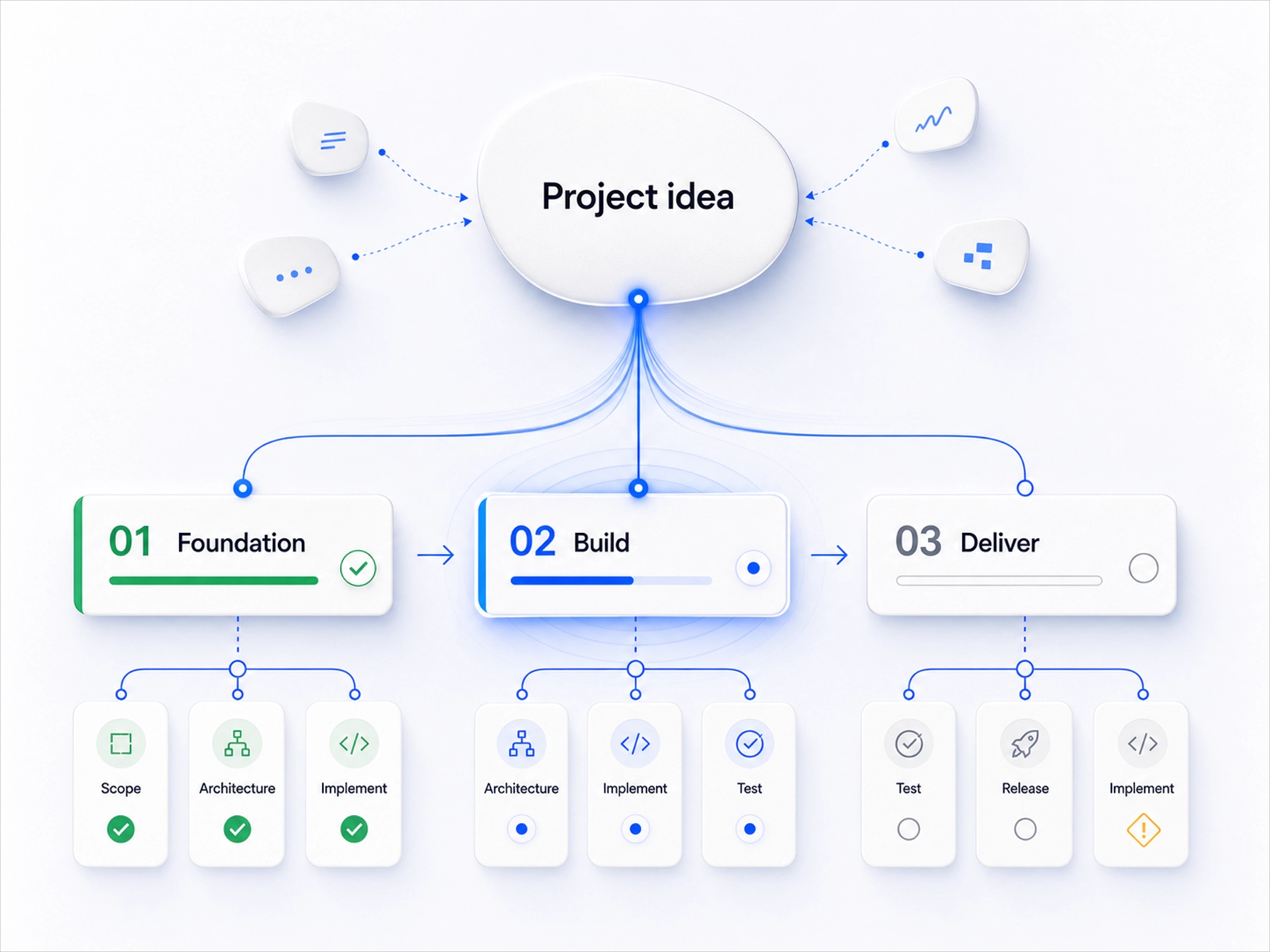
Turn intent into executable work.
NextDo converts an idea—or an existing codebase—into clear milestones and self-contained tasks with the context, acceptance criteria, and validation an AI agent needs.
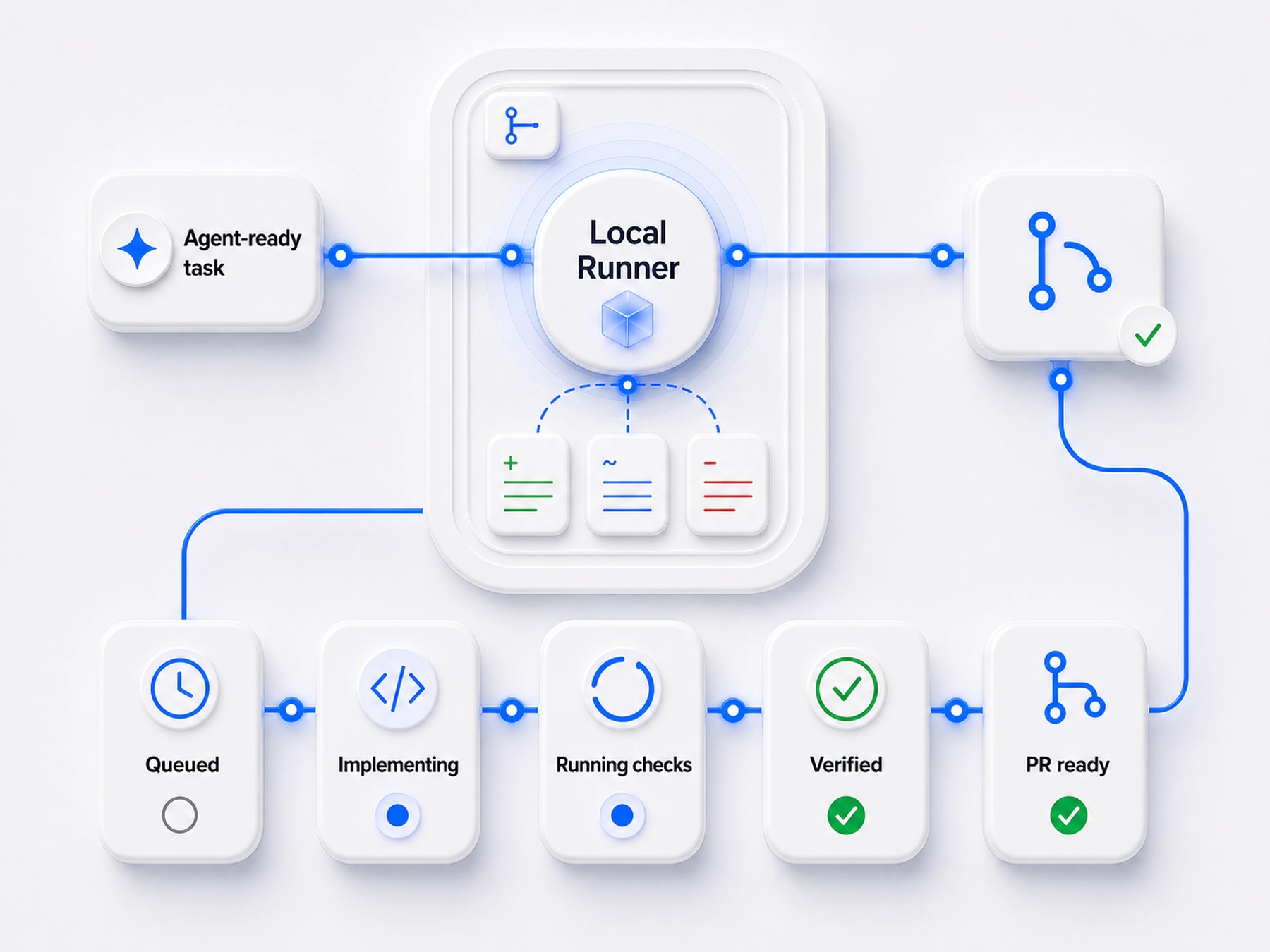
Keep the power local and the process visible.
A desktop runner uses the developer’s existing Codex or Claude subscription, works in isolated repository checkouts, runs the required checks, and prepares the pull request.
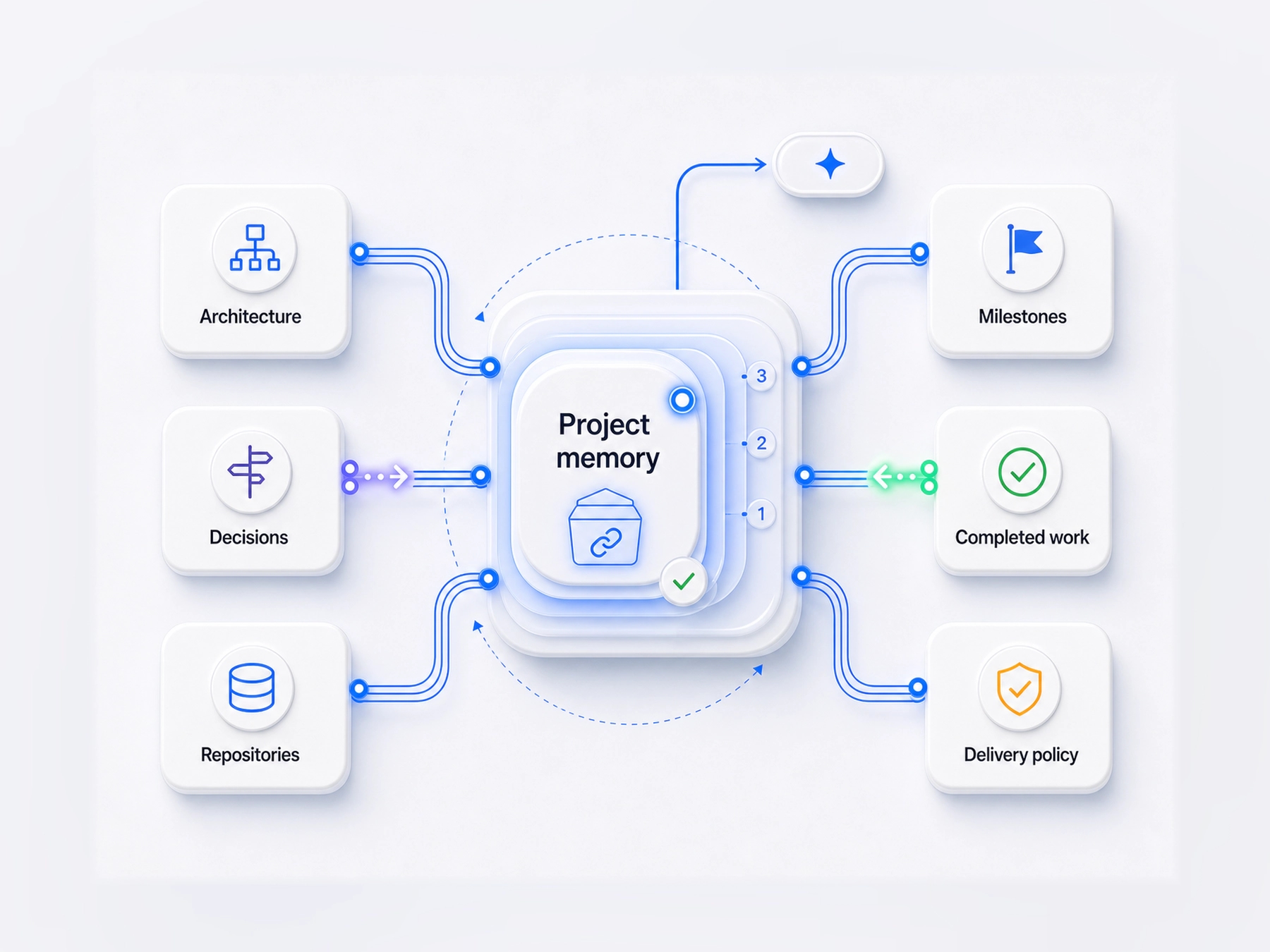
Build project memory, not more chat history.
The Brain turns decisions, architecture, outcomes, and repository knowledge into a connected, versioned graph that gives every future task better context.
Built end to end
One product across web, desktop, and repository delivery.
A Next.js application owns planning, permissions, audit, and knowledge. A Rust and Tauri runner owns local model execution, verification, and GitHub delivery.
- Next.js
- React
- TypeScript
- Rust
- Tauri
- PostgreSQL